

Soft skills: what they are, examples and ways to develop them
A survey by the recruitment agency Robert Half showed that 43% of managers attach equal importance to soft skills and professional competencies of employees. And the LinkedIn Global Talent Trends research report says: hard skills lead a candidate to the employer's door, but at the finish line it is soft skills that open them. 8 out of 10 talent managers surveyed believe that the personal qualities of the applicant are more important than hard skills : they help to adapt faster to a new place and contribute to the effective performance of work tasks.
We understand what soft skills are, what the main flexible skills are, and how to improve them to be a sought-after specialist. The article also shares effective techniques, books, and courses that will help develop soft skills for IT.
5 modules that will improve the interview skills a manager needs, introduce hiring trends, and teach you how to pitch vacancies so that candidates can't refuse offers
Course programSoft skills and hard skills: which is more important to improve?
What are soft skills and what is their main difference from hard skills? Why do employers value flexible skills so much? Let's find out together.
Hard skills are measurable professional competencies. They determine whether a person is a specialist in a specific field. For example, for a programmer, hard skills are knowledge of programming languages, for a digital marketer, knowledge of analytics tools, and for a person working in a factory, hard skills are operational and technical activities.
Soft skills are skills that show how a person interacts with society. They can be developed. In which professions do soft skills prevail? Sales, politics, and creative professions. Here you need to involve social competencies: communication skills, public speaking skills, the ability to listen and attract the interlocutor.
Soft and hard skills are equally important for lawyers, accountants, and customs officers. In these areas, a set of professional skills is important, as well as sociability, organization, and friendliness, since specialists interact with people.
Business owners understand that work problems are not related to a person's lack of knowledge, but to their inability to interact with the team . For example, an organization may have a great project manager, business analyst, or tester, but it will be difficult to work with them. So the person's experience and professionalism will simply be devalued.
 “Soft skills will not replace hard skills, or the real competence of employees. They are designed to increase their value,” Julien Bure, co-author of the book “Soft Skills”

Soft skills and the development of personal qualities are needed by specialists in any field and position level. For Junes, flexible skills will be a desire to learn and curiosity. For managers, the ability to give feedback, negotiation skills and strategic thinking. Top businessmen speak about the importance of soft skills: for example, entrepreneur Elon Musk and AliExpress founder Jack Ma .
Here are 4 reasons to develop soft skills in employees :
-
Rapid adaptation in a complex environment. The digital revolution and the ability to quickly exchange information have eliminated rigid forms of labor organization. Studies show that salary increases do not increase work efficiency and satisfaction. Thus, since 2017, flexible work schedules, loyalty, and an atmosphere of trust have become more important for employees.
The lack of an atmosphere of cooperation and a rigid hierarchy within the company are a thing of the past. To keep up with changes, companies need employees who can learn from unforeseen situations and adapt to new realities. -
Preparing for the introduction of artificial intelligence. According to a Bruegel study, more than 47% of professions in the United States will be automated, and some will cease to exist altogether. The scenario is bleak: according to forecasts, this will happen by 2030.
Artificial intelligence will put even highly skilled workers at risk. The demand for technical skills will decrease, and creative people with advanced communication skills, the ability to build relationships with complex clients and partners, as well as people with advanced emotional intelligence will be more often sought. These qualities will become a must-have for candidates. - Increasing the value of the company. According to forecasts, by 2030, companies around the world will experience a shortage of personnel with the necessary competencies. Gathering the right people at the right time becomes a matter of competitive advantage for the organization. Therefore, it is important to build an effective candidate search process and organize the development of soft skills in employees now. First of all, it is necessary to improve socio-emotional and behavioral skills: communication, adaptability, emotional management and empathy.
-
Maintaining competitiveness and efficiency. In addition to employee productivity, the engine of progress is their motivation. One of the main ways to maintain it is through gratitude. A study by the University of Pennsylvania confirmed that people are 50% more productive if you express gratitude to them. According to 54% of HR managers, it is also important to offer corporate training programs and develop employees' soft skills, and to teach managers active listening, feedback, and leadership.
 Developing soft skills in employees is very important.
Companies also need to pump up soft skills in employees to strengthen the employer brand . According to a 2016 Deloitte survey , millennials, who made up about 50% of French workers in 2020, have high expectations for their employers. Transparency in work processes and honesty are important to them. 52% of respondents mentioned that the company's reputation is a key criterion for sending a resume.
Examples of soft skills for everyone: what employers value
Every company has its own list of soft skills that a candidate should have. We have selected the five most important soft skills that are valued in most organizations. They are worth improving for specialists of all positions and specializations.
Communication
According to McKinsey & Company, communication skills are among the three skills that HR managers most often lack in candidates. Communication skills show how a person works in a team, whether he or she can explain complex things in simple language and prevent conflicts.
Here are some tips that will help you express your thoughts and ideas correctly, and not leave behind mysterious ambiguities for your colleague.
- Use “I-statements.” Psychologist Thomas Gordon developed the “I-statement” technique to help you describe your feelings in a specific situation without blaming others. “I-statements” are based on the formula: when you are A (behavior), I feel B (feeling), because C (reason), and I want D (desire).
According to the technique, you take responsibility for your personal worries , rather than blaming the other person for their actions. For example, instead of saying, “You always miss deadlines, and management wants to fire you,” it’s better to use the following message: “I’m worried that you’re not delivering work on time, because we’re letting our clients down, and you, a qualified professional, could be fired.”
- Say the important things at the beginning and end of your message. Structure your speech so that the main ideas are in the introduction and conclusion: this way the interlocutor's brain remembers the information better. This feature - the edge effect - was noticed and described by the German psychologist Hermann Ebbinghaus. The beginning of a speech is remembered because the opponent clings to the first piece of information stored in long-term memory. The end of the message is postponed in the mind due to the novelty effect. Everything in the middle of the speech is quickly forgotten.
- Rephrase the other person. According to Carl Rogers, one of the founders of humanistic psychology, the ideal formula for communication is attentive listening without instructions or advice, as well as reframing the other person's lines. Personal beliefs and goals seem more realistic to people if they hear them from the other person in a different formulation.
For example, a colleague says, “I’m quitting. I want to become an artist—I’ve dreamed of it since I was a child. However, I’m afraid that my future career won’t be as exciting as I imagine it to be.” According to Rogers, in such a case, it’s better to respond like this: “I think this is really your life’s dream. I’m sure you understand that it won’t be easy financially, but ‘you never know until you try.’”
- Don't be afraid to rephrase your thoughts. Researchers at the University of Pennsylvania found that poorly chosen words cause stress and weaken the immune system. To reduce tension and avoid conflict, try changing the wording instead of trying to prove yourself right. Use phrases like: "That's not what I meant. Let me rephrase," "I misphrased. Let me explain it another way," or "I'm sorry, I was too harsh. I meant..."
 Steering a conversation in the right direction is a very important skill.
What to read to improve your communication skills
The book "The Art of Speaking", James Borg. A business communications consultant teaches you how to correctly express thoughts and ideas, as well as understand the interlocutor. In the book you will find practical recommendations that will help you achieve the desired result and avoid sharp corners in communicating with the people around you.
Teamwork
How to understand whether an employee will be able to join a new team? Determine whether he will not overwhelm colleagues with his experience, but will complement the team and help improve the project? The searcher's ability to cooperate will answer these questions.
Collaboration is about asking for help and moving from competition to collaboration to achieve high results. Why are so many of us not good at collaborating? Maybe you’re one of those lone stars—people who achieve high individual results but don’t seek to help their colleagues on a project or other departments in the company. Most often, these are employees with advanced leadership skills. They don’t encourage “butterflies”—team players who focus on the collective effort rather than personal results.
“The wisdom of a group of capable people is greater than the intellectual potential of its most talented member,” Twyla Tharp, choreographerReluctance to collaborate is also often associated with a fear of showing one’s shortcomings . For people, delegating or asking for help is tantamount to admitting “I’m not very capable.” Employees don’t want to show their vulnerability, so they decide it’s better not to ask anyone for help. This becomes an obstacle to collaboration. In addition, collaboration forces us to accept the opinions of our partners — and everything in which they are different from us.
“The best innovations happen when people from different industries come together, generate ideas through collaboration, and develop great products,” Morten Hansen, author of Collaboration: How to Move from Competition to CooperationHow to develop the soft skill of collaboration? Learn to work together across departments and don't be afraid to help others. In addition,
- If possible, work with those who are better than you;
- don't be afraid of working with difficult partners;
- think clearly about the goal - this is the key to successful collaboration;
- approve the procedure for joint work;
- Express gratitude to those you work with.
Top managers and leaders need to learn how to motivate employees from different departments to work together. To do this, assess the opportunities for cooperation, identify barriers to collaboration, and develop solutions to the problems that prevent successful teamwork.
In business, the goal of collaboration can be innovation, increased profits, or significant cost savings. Possible barriers include reluctance to help, lack of desire to connect with colleagues, reluctance to collaborate with unfamiliar people, and fear of delegation.
What to read about effective delegation
- “The Habit of Working Together. How to Move in the Same Direction, Understand People, and Create a Real Team,” by Twyla Tharp. The author of the book is a famous American choreographer. She has collaborated with the New York City Ballet, the Paris Opera Ballet, the Royal Ballet of London, and the American Ballet Theatre. Twyla teaches how to build relationships, work under different conditions and in different types of collaboration with partners, friends, and organizations, and also avoid problems while benefiting from collaboration. The book presents examples of Twyla Tharp’s successful collaboration with Frank Sinatra, Billy Joel, and other stars.
"Collaboration. How to move from rivalry to cooperation", Morten Hansen. Professor of Management at the University of California, Berkeley, Morten Hansen teaches how to unite people and harness the power of collaboration. The book is based on 15 years of research on the topic of collaboration. The recommendations are suitable for leaders and managers in all fields - from business owners and school principals to orchestra conductors.
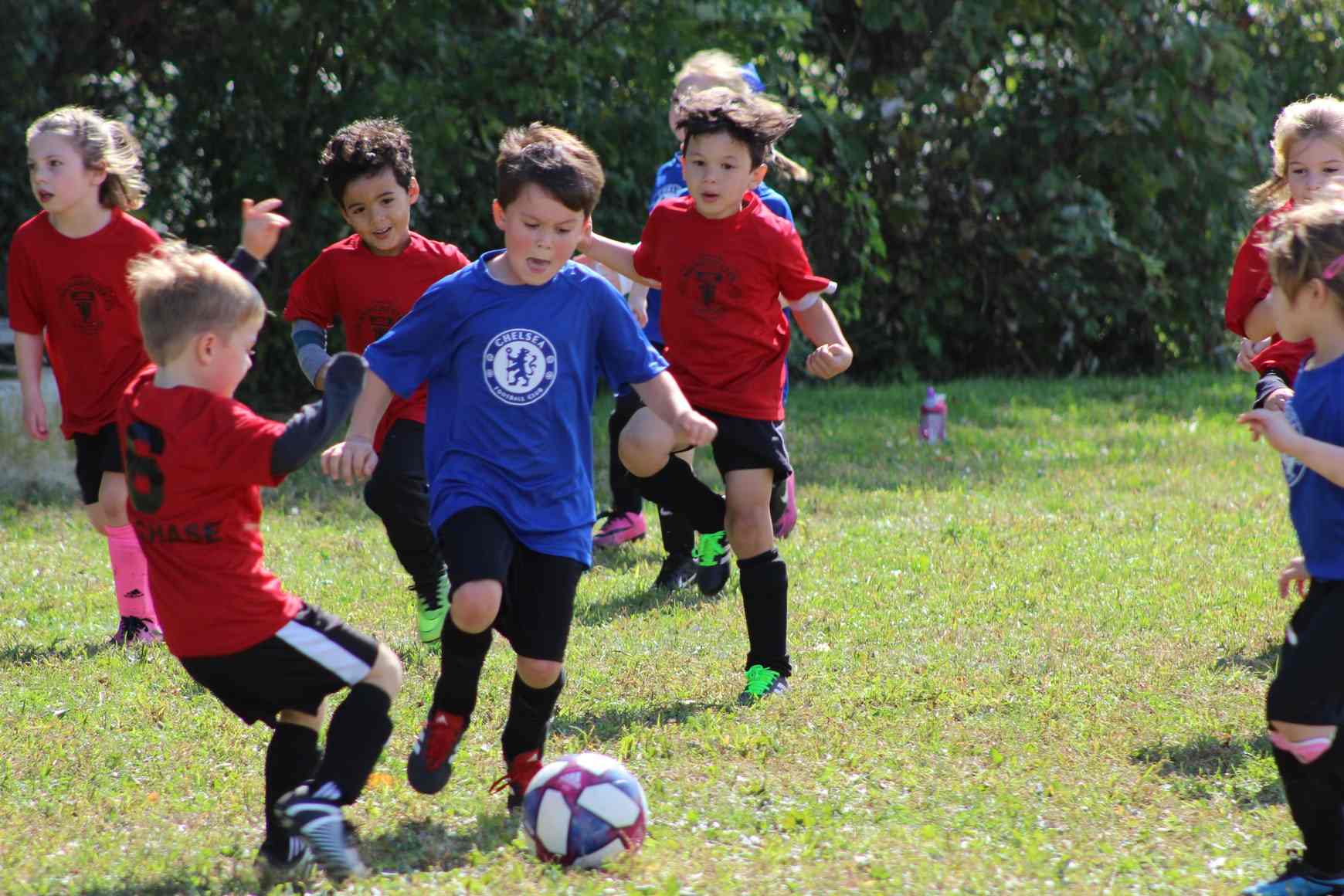 Cultivating a cohesive team is one of the main conditions for effective company development.
Emotional intelligence
People with high levels of emotional intelligence are able to objectively assess the situation , interact effectively with people, understand their emotions and manage their own. The ability to manage negative emotions will be useful during difficult negotiations: for example, in this article, a former FBI agent explains how low emotional intelligence can throw you off balance in a difficult situation. And understanding people's reactions will help create products designed for a large audience. In addition, people with high levels of emotional intelligence quickly adapt to new conditions.
Emotional intelligence includes 4 components:
- understanding yourself: your emotions and needs;
- control over one's own emotions;
- good perception of people, understanding of other people's feelings;
- managing other people's emotions.
According to a Career Builder study , 71% of recruiters believe that emotional intelligence is more important than intelligence quotient (IQ). At the same time, 59% of professionals say they would not hire someone with low emotional intelligence, even if they had a high IQ.
To increase your emotional intelligence , you need to learn to pay attention to your emotions and accept them. Observe your state and track your reactions to the events that are happening or the actions of people around you. Improve your nonverbal communication - this will help you control your gestures, as well as understand what other people are really feeling. Try to put yourself in the shoes of your colleagues to better understand their actions.
What to read to improve emotional intelligence
- "Emotional Agility. How to Start Enjoying Change and Enjoying Work and Life," by Susan David. Doctor of Philosophy, psychologist at Harvard Medical School, founder and CEO of the consulting company Evidence Based Psychology, Susan David, after 20 years of studying emotions, developed the concept of "emotional flexibility," which was recognized as the idea of the year according to HBR. Her book will help you understand your emotions, teach you to accept them, and reach the peak of your development with them.
- "Emotional Intelligence. Why It Can Mean More Than IQ," by Daniel Goleman. The author of the book is a famous American psychologist and science journalist. In the book, Daniel Goleman teaches how to restrain emotional impulses, guess other people's feelings, and build relationships. He also presents a detailed analysis of the manifestations of emotional intelligence.
- "Emotional Intelligence", (HBR) a team of authors. Harvard Business Review is the world's leading business magazine. The book by the team of authors collects the best works on emotional intelligence and leadership in the entire history of the magazine. You will learn what personal qualities an effective leader should have, why it is important to listen to the opinions of colleagues, how to tame your temperament, develop EQ and raise the emotional intelligence of employees to a new level.
Courses for self-development of soft skills:
◼️ Emotional Intelligence (4brain)
◼️ Inspiring Leadership through Emotional Intelligence ("Leadership and Emotional Intelligence", Coursera).
 By reading information with emotional intelligence, you learn more than from a person's words.
Critical thinking
How to determine whether the news contains pseudo-facts, distortions of data or lies? In order to make important decisions, recognize manipulation and propaganda, it is important to evaluate data and facts, filter out unnecessary things and draw the right conclusions. Critical thinking in society is poorly developed , because we were taught to think in a standard way. For example, essays at school had to be written, conveying the teacher's opinion - otherwise you would not get a high score.
Meanwhile, thanks to developed critical thinking, surgeons determine which patients need surgery, and lawyers develop a defense strategy. Even if you are not a surgeon or a lawyer, you need to get rid of erroneous judgments, analyze information, approach situations from different angles, and defend your position, which is not based on the conclusions of other people.
Interesting fact: Bill Gates devotes a week twice a year to improving his critical thinking. He retreats as far away from big cities as possible and generates innovative ideas. Among the results of such retreats is the famous Internet Explorer.
Here are some possible data reporting tricks that we often believe:
- Misleading illustrations - infographics look convincing, but they are often created with the expectation that most people will not delve into the essence of the issue.
- Accurate numbers — we are more likely to believe the phrase “17.49% of new car sales are electric” than the phrase “Many people are buying electric cars these days.” However, the author of the phrase could have made up the numbers. Perhaps he interviewed a very small number of people near an electric car dealership.
- Statistics are people choosing what to count, how to count, what results to share, what words to describe them, and how to interpret the numbers. Statistics are not facts, they are interpretations. They are often used to influence public policy, raise money for a cause, or produce a newspaper with a catchy headline.
- Access is one of those words that should raise alarm bells when you see it in statistics. For example, one TV channel in the US advertised itself as: “We are available in 100 million homes!” However, that doesn’t mean that 100 million people watch it.
How to improve critical thinking
- Look for paradoxes — analyze contradictory thoughts.
- Review one of the stereotypes you believe in. It's probably long outdated.
- Talk to random passersby at bars or shopping malls, exploring different opinions that are different from yours.
- Check the news if you see the word “majority.” In one case it’s 99%, in another it’s 51%.
 Nowadays, critical thinking is an important skill for every person.
What to read to improve critical thinking
- "A Guide to Lies. Critical Thinking in the Post-Truth Era," by Daniel Levitin. The author of the book is a neuroscientist, psychologist, professor at McGill University in Montreal, and a former lecturer at Stanford. Daniel Levitin offers a set of tools to help process incoming information and detect lies.
- “Psychological Traps. How We Create What We Suffer From Later,” Giorgio Nardone. Italian psychotherapist Giorgio Nardone is convinced that there are seven traps of the mind that distort our perception of the people around us and the situations we find ourselves in. For example, we attribute our position to others, believe that we must adhere to our views to the end, and think that everything will be fine if we think positively. As a result, we make the wrong decisions and suffer from it.
- "Factology. Ten misconceptions about the world, and why everything is much better than we think", Hans Rosling, Anna Rosling-Rönnlund, Ola Rosling. A specialist in global health issues, Hans Rosling described popular misconceptions about diseases, poverty, and global climate change. It turned out that over the past 20 years, the standard of living on Earth has increased. In these circumstances, 87-93% of educated people are convinced that the situation in the world is only getting worse. According to the author, one of the main explanations is people's inability to work with data. Rosling sees the solution to the problem in the ability to assess the veracity of information. How to do this is described in detail in the book.
"How to Lie with Statistics," Darrell Guff. The author of the book is convinced: 76% of statistics are taken from the head. In his book, the American writer talks about the main mistakes in the field of calculations, how data for statistics is collected and what is left behind. It turns out that information for statistics is often collected incorrectly, the sample is mostly biased, and the "average" is mostly misleading.
"There are three kinds of lies: lies, damned lies, and statistics." Benjamin Disraeli, British politicianCourses for self-development of soft skills:
◼️ Critical thinking (4brain);
◼️ Logical and Critical Thinking ("Logical and Critical Thinking", Future Learn).
Dig deep, get into the details, and be curious. Don't be fooled by hype and yellow headlines. Question what you're 100% sure of, giving a second opinion a chance.
Design thinking (creativity)
In the world of VUCA (variability, uncertainty, complexity and ambiguity), the ability to think outside the box — to think broadly — becomes important. Non-standard, creative thinking is needed not only for copywriters and photographers, but also for financiers and HR specialists. This skill shows whether a candidate is able to look for unusual approaches to solving even typical routine tasks. Economist Navi Raju tells more about how this helps in practice in a TED talk .
How to improve creativity
- Identify a problem that is bothering you. Think about how your favorite movie or book character would solve it if they were in your shoes.
- Observe people and try to come up with biographies for passersby.
- Go through quest rooms to learn to look at the situation from a different angle.
If you work remotely, come into the office from time to time. It’s a good opportunity to discuss work-related matters and exchange ideas. Steve Jobs wrote that cool features are born during chance meetings around the coffee machine. He even designed the location of the office bathrooms so that people often bump into each other.
What to read to boost your creativity
- "Genius on demand. An easy way to find unconventional solutions and ideas", Mark Levy. The author of the book is the president of Levy Innovation LLC, a consulting company that develops marketing strategies for clients. They help increase companies' profits several times. Mark Levy offers a freewriting technique that will help in solving business problems, generating ideas, writing articles and books. Freewriting will help you become more honest and original, find breakthrough solutions and ideas.
- “The Creative Thinking Handbook,” by Chris Griffiths. The founder of OpenGenius, a company that trains innovation teams, explains in his book what blocks idea generation and how to tune in to creativity. Each chapter presents mistakes that “kill” unconventional thinking. For example, the desire to be first and reacting to competitors’ actions are mistakes of reactive thinking that most often lead to failure.
Courses for self-development of soft skills:
◼️ Idea generation (IKRA);
◼️ TRVZ — theory of solving inventive problems (4brain);
◼️ The Creative Thinking Course (“Creative Thinking Course”, Udemy);
◼️ Creative thinking: developing creativity (4brain).
 Creativity will help in finding non-standard solutions
Soft skills: a list of 3 skills for a successful career as a programmer
For developers, soft skills are as important as technical know-how. In January 2021, the results of the study "What skills are IT companies looking for in new developers?" were published . The authors studied more than 20 thousand vacancies for developers, identifying the most in-demand skills. In addition to technical knowledge, the selection included soft skills. The following personal qualities were most often mentioned in vacancies:
- communication — included in 32% of vacancies;
- collaboration — the word "team" appears in 22% of ads;
- Problem solving is present in 15% of vacancies.
These skills will be useful both at work and outside the office. They will help you express your thoughts clearly , prevent conflicts, and achieve better results through teamwork. And problem-solving skills will help you make decisions consciously, without falling into extremes and thinking traps.
Be softer: how to understand what soft skills you need and how to develop them
Every year, LinkedIn publishes a list of the most in-demand soft skills . For example, you can see the list of top skills for 2020 at the link . We recommend that you study the current list for the current year, then analyze which skills you lack.
▶️ Use the test to determine your sociotype and weaknesses. A sociotype is an innate type of a person's thinking structure. For example, rationals are prone to planning, and the lack of a plan creates a feeling of insecurity in them. And an extrovert needs an introvert to help focus on a specific issue and refine what an extroverted employee has started.
▶️ Take the test in your company, if one is available. One of the employee evaluation techniques is the STAR formula:
S - how was it;
T - analysis;
A - action;
R - result.
"How was it" : Tell me, have you ever had situations at work when everything got out of control? It's impossible to control your emotions all the time.
"Analysis" : What was the situation?
"Action" : How did your intemperance manifest itself?
"Result" : How did it all end? Did you manage to find a solution, a compromise? How did you get the situation back under control?
▶️ Go to interviews, even if you are not interested in a new job. This will help you understand what you lack for a similar position in a larger company. Some organizations even offer express tests to assess soft skills before the main interview. Thanks to this approach, candidates with advanced soft skills are identified even before their technical skills are assessed - and they do this based on clear statistics. The effectiveness of this approach is discussed in the Harvard Business Review.
▶️ Request feedback from colleagues or managers - ask about your strengths and weaknesses. Yes, you can find out that your weakness is delegation, and start improving this skill as soon as possible.
It's not just about deciding on a set of flexible skills. It's also important to understand what balance of hard and soft skills is optimal for your profession. Consider:
- What are the features of your profession that are valued in your position?
- How quickly is the field you work in changing?
- What are the specifics of your job — for example, do you work in a company or freelance, with people or with documents?
- What is your goal: is a career important to you? If so, be specific about what you want to achieve.
Listen to your own feelings. What types of work do you find difficult? Maybe it's communication? Decision-making? Or do you waste a lot of time on routine tasks because you don't know the right programs?
Features of working on soft skills: with a coach, on courses and independently
Soft skills work like muscles : the more you train them, the stronger they become. However, most often people do not know what skills they need to develop and how to do it. The first thing that comes to mind is to go to Google or watch a video on YouTube. Considering that most people lack the skills of independent acquisition of knowledge, such training does not give the desired effect. The skill remains at the level of "read - seen - heard - know": a person understands what needs to be done, but it is not clear where and how to apply the learned theory.
 You can learn in different ways.
There are several ways to develop soft skills . The first is through courses and trainings, under the guidance of a mentor. The second is through books and videos on soft skills. The third is through a coach. And finally, the fourth way is to develop based on feedback from colleagues and managers. You can also combine methods. Important: no matter which method you choose, you need to evaluate the experience gained.
Soft skills can only be developed through regular practice. Simply reading books or watching YouTube won't help. So set a specific goal for yourself and measure your results.
An example of a bad goal: “I want to improve my emotional intelligence.” This goal is generalized, with zero specifics.
An example of a good goal: “I want to understand my emotions more deeply so I don’t take it out on my loved ones and colleagues.” This goal is specific, back it up with a deadline, and you can look for a mentor or appropriate courses.
Start with small steps : this way you will increase your chances of success and not give up on developing your skills early in your studies. For example, if you want to improve your public speaking skills, start with presentations in front of colleagues, not with a large business conference.
You can find detailed advice in books, videos, and courses. For example, the coaching book “Smart Reading: 12 soft skills of the 21st century” contains summaries of best-selling entrepreneurs and soft skills consultants. It will help you improve emotional intelligence, character strength, problem-management skills, and other necessary skills.
The conclusion is one: nowadays it is not enough to focus only on the development of professional skills . It is also worth remembering about personal qualities, or soft skills. Be digital but also be very human.